1919 W 1st St Suite B, Sanford, FL 32771 | Mon- Fri 8 AM–4:30 PM

Blog
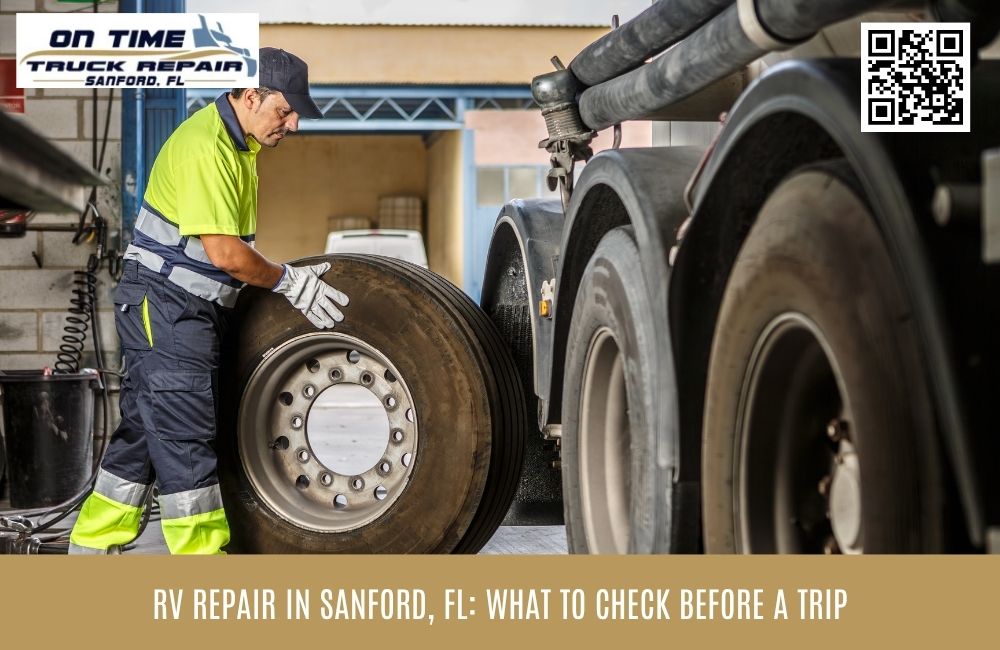
RV Repair in Sanford, FL: What to Check Before a Trip
A campsite reservation tells you where the trip begins, but an inspection helps determine whether your RV is ready to get there. Vehicles that sit between vacations can develop problems without accumulating many miles. Batteries discharge, tires lose pressure, and small leaks become easier to miss. For owners comparing RV service with Mobile Truck Repair , the important question is whether the provider can evaluate the specific chassis and systems involved. Start preparing while there is still time to investigate concerns before departure.
Build Your Inspection Around the Actual Journey
A short campground visit and a loaded interstate journey place different demands on the same vehicle. Consider passenger weight, stored equipment, water, fuel, and anything being towed. Confirm the vehicle’s applicable weight ratings and towing limits using its documentation.
Bring maintenance records to your appointment and explain how long the RV has been parked. Mention any unresolved warning, unusual noise, or repair from the previous trip. A technician cannot assess an intermittent complaint effectively if the history stays in a drawer.
Sanford owners planning travel through Central Florida should schedule service before the final packing day. This creates time for diagnosis, parts availability, and any additional work identified during inspection.
Begin Inside Before Looking Underneath
Test Safety Devices and Identify Unfamiliar Odors
Check smoke, carbon monoxide, and propane detectors according to their manufacturers’ instructions. Verify replacement dates where applicable. A detector that has reached its service life should not be treated as reliable simply because it remains mounted.
Investigate fuel or propane odors before using appliances or traveling. Leave the vehicle and obtain qualified assistance when a leak is suspected. Do not search for a gas leak with a flame.
Generator exhaust also requires attention. The United States Fire Administration advises positioning generator exhaust away from and downwind of the RV. Follow the equipment instructions and confirm that exhaust cannot enter occupied spaces.
Look for Water Intrusion and Loose Equipment
Inspect accessible areas around windows, ceiling seams, and plumbing connections for staining or dampness. A small leak can damage finishes and conceal a larger problem. Photograph suspicious areas so changes can be discussed with the appropriate repair specialist.
Secure cabinet contents and verify that travel latches, exterior compartments, and retractable equipment operate correctly. Confirm that steps, slides, and awnings are secured according to the RV manufacturer’s procedures before moving.
Evaluate Tires With the RV’s Load in Mind
Tread depth alone does not establish tire readiness. Inspect sidewalls for cracking, bulges, cuts, or other damage. Review tire age and replacement guidance, particularly when the RV has spent extended periods in storage.
Check pressure while tires are cold using an appropriate gauge. NHTSA recommends inspecting tires before long trips and using the vehicle manufacturer’s recommended inflation guidance rather than assuming the sidewall maximum is the target pressure.
For an RV, confirm tire specifications and inflation requirements against the vehicle documentation and applicable manufacturer guidance for its load. Seek qualified advice when weights, replacement tires, or modifications create uncertainty.
Pay attention to uneven wear. It may involve inflation, suspension, loading, or Truck Alignment concerns on a compatible chassis. Replacing a worn tire without investigating the wear pattern can leave the underlying issue unresolved.
Separate Alignment Symptoms From Other Handling Problems
An RV that wanders, pulls, or develops an off-center steering wheel deserves an assessment before a long drive. Road conditions, tire problems, steering wear, and suspension defects can create similar impressions behind the wheel.
When contacting a Truck Alignment Shop, provide the RV’s length, chassis information, and approximate weight. Confirm that its equipment and working space can accommodate your vehicle before arranging the visit.
Big Truck Alignment may be relevant to larger motorhomes, but size alone does not determine the service needed. The technician should identify the chassis configuration and evaluate related components before recommending adjustments.
Searching Truck Alignment Near Me is only the beginning. Ask what the inspection covers and whether the vehicle should arrive with its usual travel load. An appropriate Truck Alignment Service should follow vehicle specifications and address conditions that could interfere with accurate results.
Review Starting, Cooling, and Braking Before Departure
An engine that starts after storage still needs more than a quick idle check. Review fluid levels using the manufacturer’s procedures and report visible leaks, damaged hoses, or abnormal temperature readings. Never remove a cooling system cap while the system is hot.
Have battery condition and connections evaluated when starting is slow or electrical behavior is inconsistent. House batteries and chassis batteries may serve different functions, so explain which equipment loses power.
Brake inspection should match the RV’s system. Report pulling during braking, unusual pedal response, warning lamps, or changes in stopping performance. If towing, include the trailer braking arrangement and connections in the discussion. Do not begin the trip with a known braking defect.
Confirm the Service Provider Fits Your RV
A Truck Repair Shop may be equipped for certain motorhome chassis repairs without handling every appliance, roof, or interior system. Describe the requested work clearly and confirm scope before booking. This avoids arriving for a mechanical appointment expecting unrelated living-area repairs.
Mobile Truck Repair may be suitable for some accessible mechanical problems where safe working conditions exist. Other jobs require shop equipment or a specialist. Ask what can realistically be assessed at the RV’s current location.
For businesses operating multiple recreational vehicles, Fleet Maintenance can organize inspection dates, mileage records, recurring defects, and seasonal preparation. Private owners benefit from the same habit of keeping a consistent service history.
Before loading, carefully inspect the hitch or towing connections using the relevant equipment instructions. Check all lighting connections, mirrors, and visibility from the driving position. If anything is loose, damaged, or unfamiliar, have it evaluated before coupling equipment or entering traffic.
Keep the final departure safety check separate from the repair appointment. Walk around the parked RV to confirm that utility connections are disconnected, storage doors are closed, and equipment is secured. Give yourself enough daylight and time to complete this check carefully instead of rushing unnecessarily because the campsite arrival window is approaching.
Questions to Resolve Before Leaving Sanford
Is low mileage a reason to skip inspection?
No. Storage time affects batteries, tires, seals, and other components. Base preparation on condition, elapsed time, and manufacturer guidance as well as mileage.
What information helps if the RV becomes disabled?
Keep chassis details, vehicle dimensions, location, and towing information accessible. When requesting Truck Roadside Assistance, confirm that the provider can accommodate an RV and explain whether recovery equipment may be needed.
Should a short local drive replace professional checks?
A drive may reveal concerns, but it cannot establish the condition of every component. Complete necessary inspections first and discuss unresolved symptoms before attempting travel.
Prepare for Your Trip With On Time Truck Repair
On Time Truck Repair offers RV repair service in Sanford and serves Central Florida. Family-owned since 1995, the business brings over 60 years of combined mechanical experience. Contact the team with your RV details and service concerns to discuss an appropriate appointment before departure.
On Time Truck Repair
Address: 1919 W 1st St Suite B, Sanford, FL 32771, United States
Phone: +1 (407) 321-7442


Diesel Truck repair shop in Sanford, Florida
On Time Truck Repair Shop is a trusted diesel truck repair shop in Sanford, FL, specializing in diesel truck repair, fleet maintenance, and roadside assistance. Family-owned since 1995, we proudly serve diesel drivers and fleet operators with fast, reliable service backed by decades of experience.


© On Time Truck Repair 2025 | Powered By Truck Service Marketing